The Gossip Everyone’s Whispering About Sleep Duration and Aging
If sleep had a social life, sleep duration would be the friend everyone talks about behind their back. New research keeps circling back to one dramatic idea: sleep duration might be linked to how fast your biological aging behaves. In other words, your sleep duration could be quietly influencing whether your body feels like a lively 25-year-old or a “why do my knees click when I stand up?” 60-year-old.
Scientists aren’t saying sleep duration is the only villain—or hero—but they are paying attention to it like it just walked into a room wearing a red carpet outfit. And honestly, sleep duration is starting to enjoy the attention.
The “Too Little Sleep Duration” Drama Nobody Wants to Admit
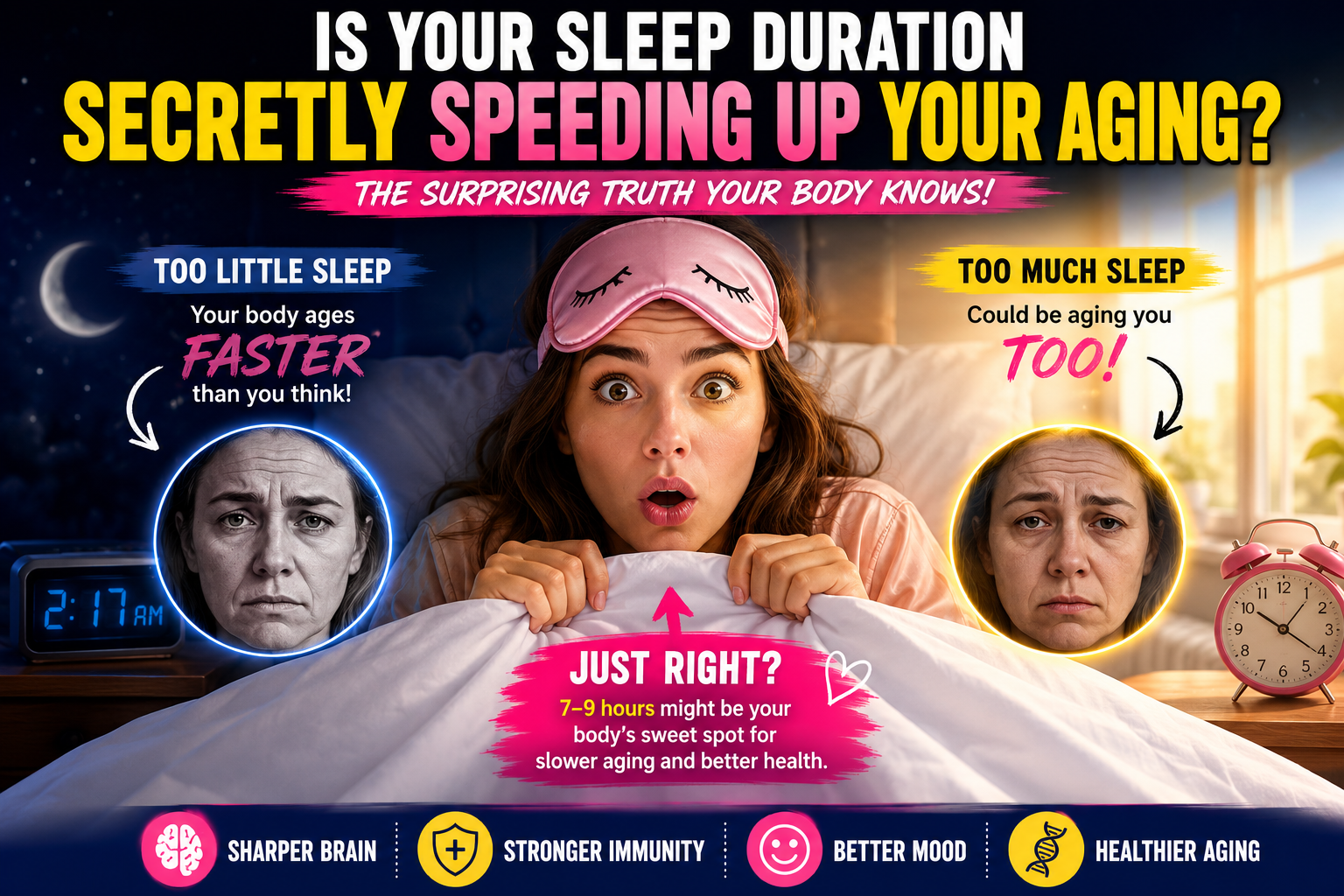
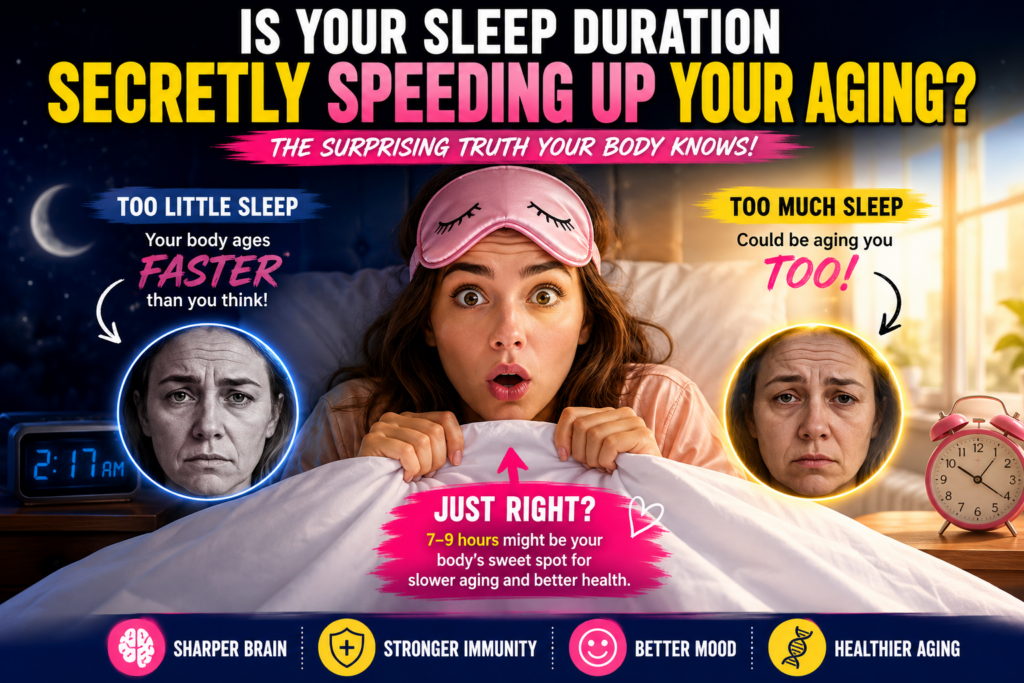
Let’s talk about the night owls and the “I’ll sleep when I’m dead” crowd. Low sleep duration has been repeatedly associated with faster biological aging patterns in several studies. That means sleep duration below the recommended range may not just leave you yawning—it could be nudging your body’s internal clock forward faster than you’d like.
The gossip version? Your sleep duration might be aging you behind your back while you scroll your phone at 2 a.m. thinking you’re just relaxing.
When Sleep Duration Gets Too Long… Yes, That’s a Thing Too
Plot twist: excessive sleep duration isn’t necessarily a fountain of youth either. Some studies suggest that very high sleep duration can also be linked with less favorable health outcomes and accelerated biological aging markers.
So sleep duration is a bit like a celebrity scandal—it’s not just about too little or too much, but finding that “just right” zone. Your body apparently loves moderation more than drama.
Why Sleep Duration Has the Body So Obsessed
Here’s where sleep duration gets scientifically interesting. Sleep duration influences everything from inflammation levels to hormone regulation and cellular repair. While you’re asleep, your body is basically running maintenance mode—cleaning, repairing, and resetting systems like an overworked but loyal backstage crew.
When sleep duration is off, that backstage crew doesn’t get enough time—or gets too much time with nothing structured to do. Either way, things start slipping.
Biological Aging: The Hidden Scoreboard Linked to Sleep Duration
Biological aging isn’t your birthday candles—it’s how old your body actually behaves internally. And sleep duration appears to have a role in how that score is calculated.
Researchers studying sleep duration and biological aging often look at markers like DNA methylation, metabolic health, and inflammation. When sleep duration is consistently poor, those markers may shift in ways associated with faster aging. Basically, sleep duration might be leaving fingerprints all over your biological “age scorecard.”
The “Goldilocks Zone” of Sleep Duration Everyone Wants
The ideal sleep duration for most adults tends to fall around 7–9 hours per night. That’s the sweet spot where sleep duration seems to support recovery, brain function, and overall cellular health.
Too little sleep duration? Your body complains. Too much sleep duration? Your body raises an eyebrow. Just-right sleep duration? Your body sends a thank-you card… metaphorically speaking.
Why Your Sleep Duration Isn’t Just a Personal Habit
Here’s the plot twist: sleep duration isn’t just a lifestyle choice—it’s deeply tied to stress, work schedules, screen time, and even social habits. That means sleep duration is often shaped by your environment more than your intentions.
So when we talk about improving sleep duration, it’s not about moral discipline. It’s about adjusting the conditions that quietly control sleep duration in the first place.
Can Fixing Sleep Duration Turn Back Biological Aging?
No, sleep duration isn’t a magical rewind button—but it might be one of the most underrated “slow aging” tools we have. Improving sleep duration consistently has been linked with better cognitive health, improved immune response, and healthier aging markers overall.
Think of sleep duration less like a miracle cure and more like daily maintenance that your future self will absolutely notice.
Final Thoughts on Sleep Duration and the Aging Plot Twist
At the end of the day, sleep duration is less of a background detail and more like a main character in your body’s aging story. Whether it’s too short, too long, or just right, sleep duration seems to have a surprisingly strong influence on how “old” your body feels over time.
And the gossip-worthy takeaway? Your sleep duration habits tonight might be quietly shaping how you feel a decade from now.
FAQs
Does sleep duration really affect biological aging?
Yes, research suggests sleep duration may influence biological aging markers like inflammation and cellular repair.
What is the ideal sleep duration for adults?
Most adults need about 7–9 hours of sleep duration per night for optimal health and aging balance.
Can too much sleep duration be harmful?
Some studies show excessive sleep duration may also be associated with health risks and aging-related markers.
Is improving sleep duration enough to slow aging?
Improving sleep duration helps, but it works best alongside exercise, nutrition, and stress management.
Why does sleep duration vary so much between people?
Sleep duration is influenced by genetics, lifestyle, stress, and environmental factors, making it highly individual.