The skies may be getting noisy again — or at least, NASA hopes they won’t. After years of teasing futuristic air travel like a tech billionaire dangling a secret project, NASA’s mysterious X-59 jet is finally preparing for its first supersonic flight. And honestly? Aviation fans are already acting like it’s the hottest celebrity comeback of the decade.
The sleek experimental aircraft, built by NASA and aerospace giant Lockheed Martin, isn’t just another flashy jet. The X-59 could completely change how we fly across the globe by solving the biggest problem that killed old-school supersonic travel: the deafening sonic boom.
Yes, the X-59 is basically trying to become the quiet luxury influencer of the aviation world.
The Jet That Looks Like It Belongs in a Sci-Fi Movie
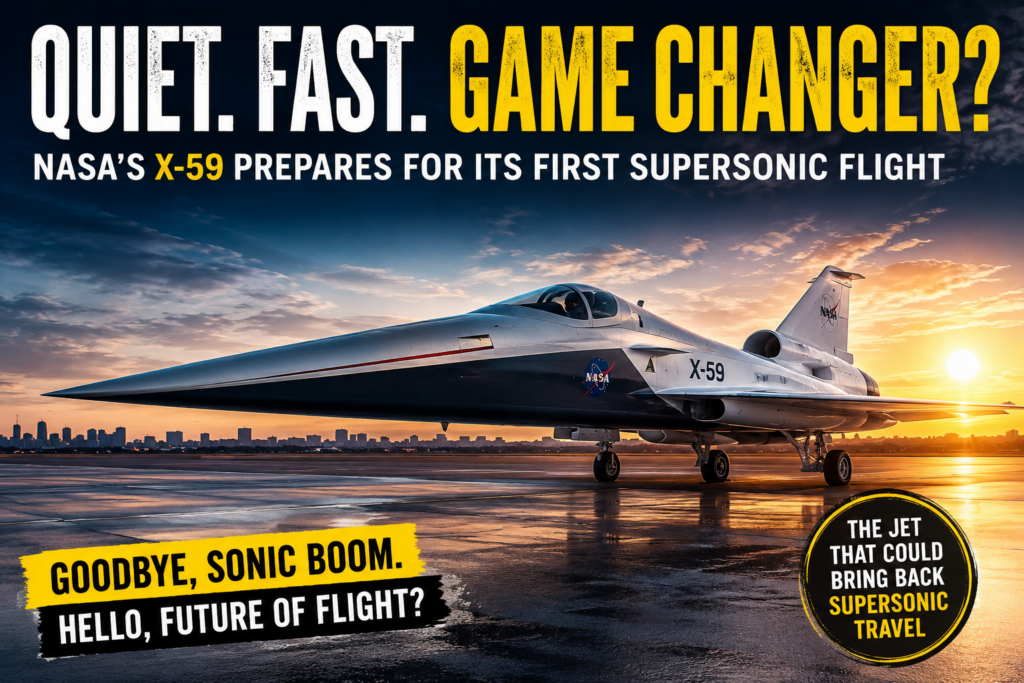
Let’s be honest — the X-59 doesn’t look normal. It looks like someone asked an AI to design a spaceship disguised as a private jet.
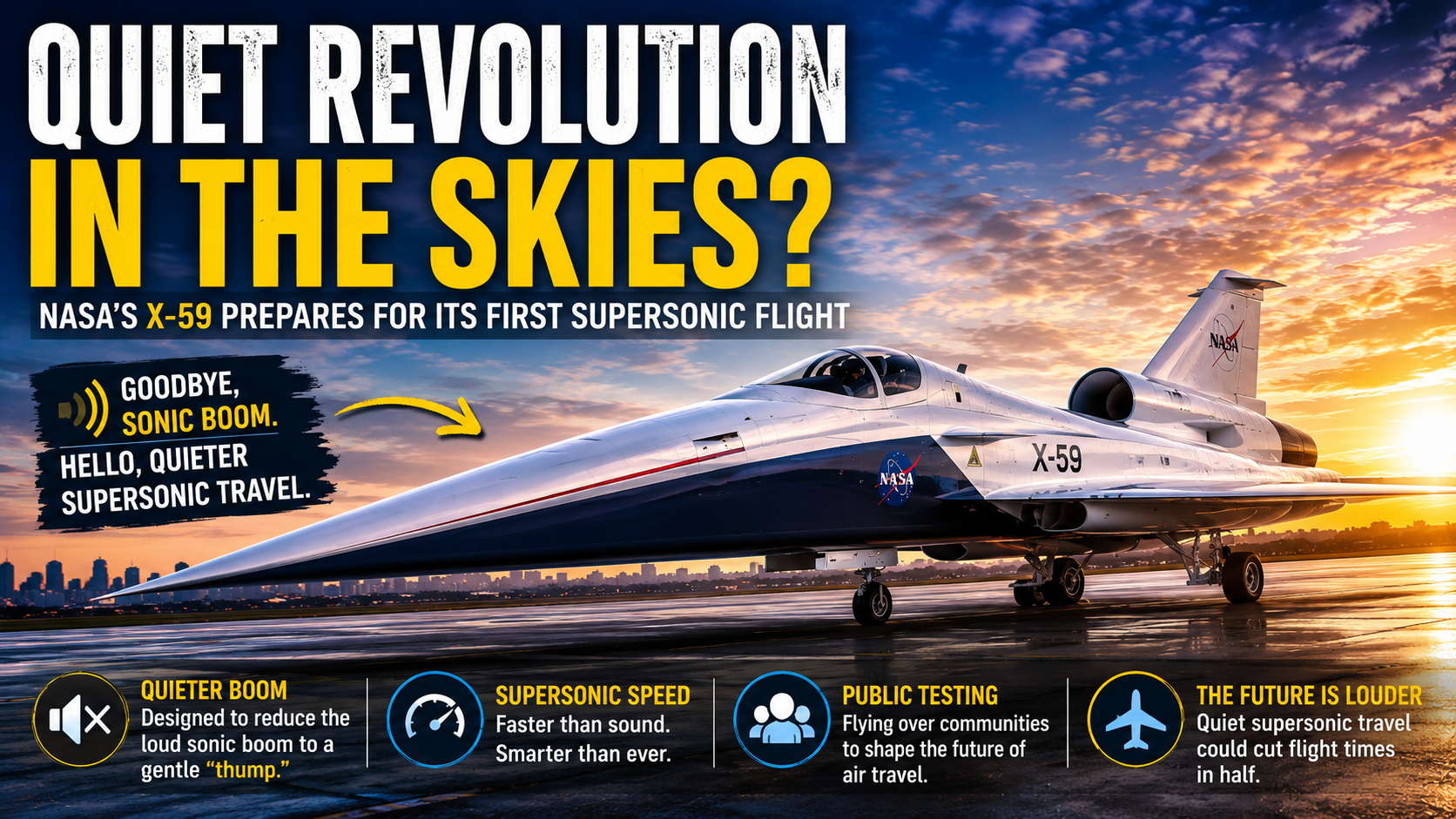
With its absurdly long nose and futuristic shape, the X-59 was designed specifically to reduce the thunderous boom normally created when aircraft break the speed of sound. Instead of producing window-rattling shockwaves that make entire neighborhoods think aliens are invading, the X-59 aims to create a much softer “thump.”
NASA calls this mission Quesst, short for Quiet SuperSonic Technology. Because apparently even government scientists enjoy giving projects dramatic blockbuster names.
The aircraft stretches more than 99 feet long, yet the cockpit sits so far back that pilots can’t even see directly in front of the plane the traditional way. Instead, they rely on an advanced camera system that gives them a virtual forward view. It’s basically aviation’s version of driving with giant gaming monitors.
Why Supersonic Flights Disappeared in the First Place
Older generations still remember the glamorous days of the Concorde, the ultra-fast passenger jet that made celebrities and wealthy travelers feel untouchably elite. Flying from New York to London in under four hours? Absolute power move.
But there was one major issue: sonic booms.
Those explosive sounds created massive public complaints, and governments eventually banned most commercial supersonic flights over land. Suddenly, the dream of ultra-fast travel became too loud, too expensive, and way too controversial.
The Concorde retired in 2003, and since then commercial aviation has mostly settled into a slower, quieter routine. But NASA clearly isn’t ready to let the dream die.
And honestly, neither are travelers who are tired of spending entire days trapped in airports eating overpriced sandwiches.
NASA’s Quiet Supersonic Gamble
The X-59 isn’t designed to carry passengers — at least not yet. Right now, it’s basically the aviation world’s experimental influencer testing whether quiet supersonic travel is actually possible.
NASA plans to fly the X-59 over selected communities in the future to measure public reactions to the quieter sound profile. Scientists want to know whether people would tolerate a softer sonic “thump” enough for regulators to reconsider current restrictions.
Translation: NASA is trying to convince the world that supersonic planes don’t have to sound like the apocalypse.
If the tests go well, the results could help open the door for a new generation of commercial supersonic aircraft. That means flights from Los Angeles to New York could someday become dramatically shorter.
Imagine boarding a plane in the morning and still having enough energy left afterward to pretend you enjoy networking events.
The First Supersonic Flight Is Getting Closer
NASA recently completed important ground testing for the X-59, including taxi tests that allow engineers to monitor how the aircraft behaves before actual flight operations begin.
Every stage matters because supersonic aircraft aren’t exactly forgiving when things go wrong. Engineers are carefully reviewing systems, controls, and performance before giving the jet permission to unleash its futuristic ambitions in the sky.
The anticipation surrounding the first supersonic flight is becoming intense among aviation enthusiasts. Social media aviation communities are already treating the X-59 like the next blockbuster premiere.
And honestly, can you blame them? Quiet supersonic travel sounds like the kind of thing we were all promised decades ago but never actually got — right alongside flying cars and robot assistants that fold laundry.
Could This Change Air Travel Forever?
Maybe. Or maybe the X-59 becomes another fascinating science project that never fully transforms commercial travel. Aerospace history is filled with gorgeous experimental aircraft that looked revolutionary but never became mainstream.
Still, the X-59 represents something bigger than one airplane. It’s about whether humanity can finally bring back speed without all the chaos that originally came with it.
If NASA succeeds, future travelers may eventually cross continents in half the time without terrifying everyone on the ground.
That would be a pretty dramatic comeback story for supersonic travel.
And frankly, the airline industry could use a little drama that doesn’t involve lost luggage.
FAQs
What is NASA’s X-59?
The X-59 is an experimental supersonic aircraft designed to fly faster than sound while producing a much quieter sonic boom.
Why is the X-59 important?
It could help bring back commercial supersonic travel by reducing the noise problems that caused older supersonic jets to disappear.
Who built the X-59?
The aircraft was developed by NASA in partnership with Lockheed Martin.
Can passengers fly on the X-59?
No, the X-59 is a research aircraft created for testing and data collection.
What makes the X-59 different from Concorde?
Unlike Concorde, the X-59 is specifically engineered to reduce the loud sonic boom into a softer sound.
When will the X-59 have its first supersonic flight?
NASA is currently completing final testing stages before the aircraft begins supersonic flight operations.