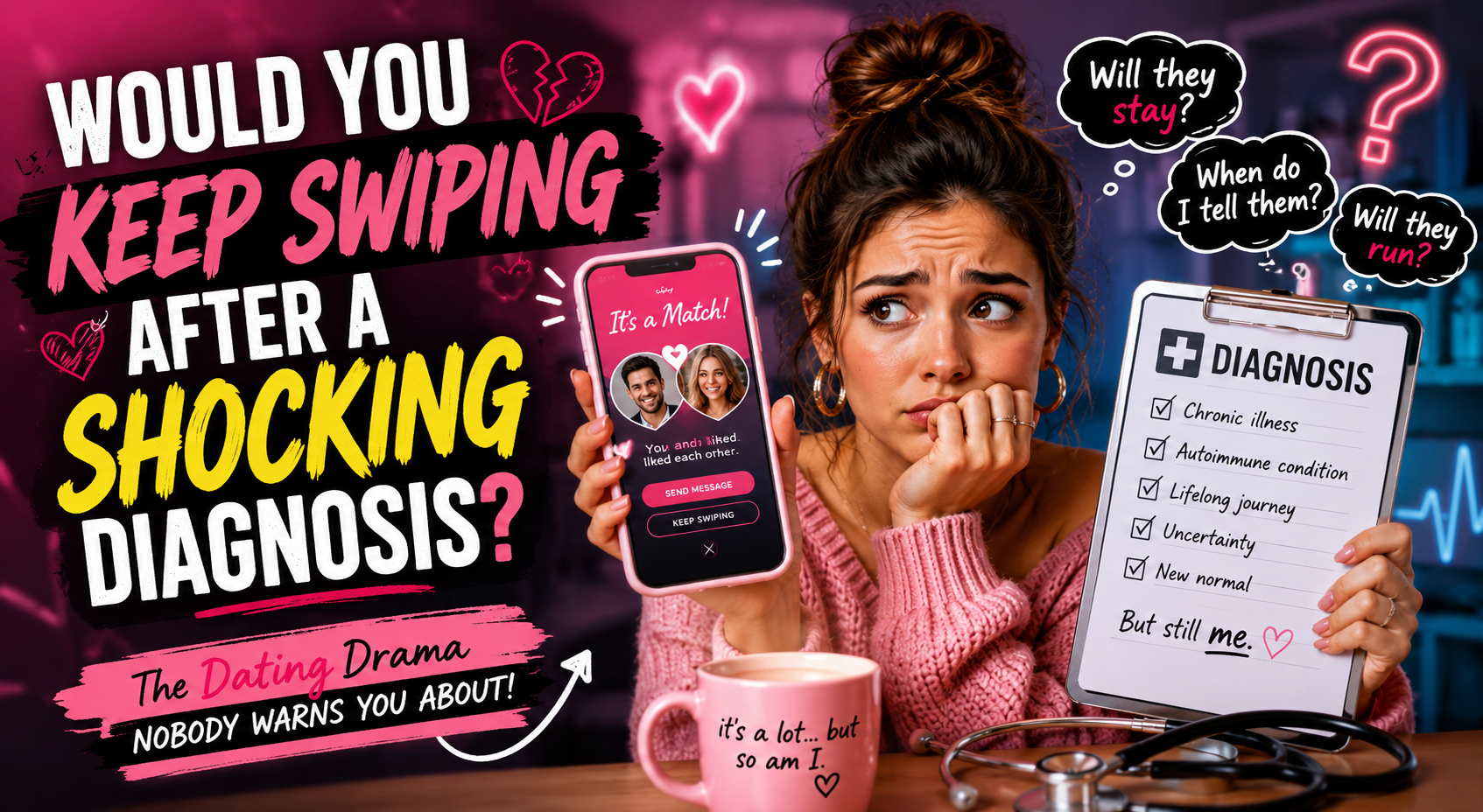
Dating is already a chaotic reality show. One minute you’re planning your wedding after three text messages, and the next you’re crying because someone left you on “read” for 48 hours. But imagine adding a brand-new medical diagnosis into the mix.
Suddenly, your love life feels less like a romantic comedy and more like a season finale packed with plot twists, emotional speeches, and dramatic exits.
Welcome to the wild world of dating while getting diagnosed.
💔 When Your Love Life Gets Interrupted by a Plot Twist
Picture this: You’re finally talking to someone cute. The chemistry is sizzling. The emojis are flowing. You’re already imagining couple selfies and matching vacation outfits.
Then—BAM.
A doctor drops life-changing news.
Whether it’s a chronic illness, autoimmune condition, disability, or another health diagnosis, everything suddenly feels different. Not only are you trying to process your own emotions, but you’re also wondering:
“When do I tell them?”
“Will they freak out?”
“Will they disappear faster than my last situationship?”
It’s enough to make anyone want to delete every dating app and move into a cabin with ten cats.
👀 The Terrifying Question: Do You Tell Them Right Away?
Let’s be honest.
Nobody wants to open a first date with:
“Hi, nice to meet you. Would you like sparkling water and a detailed explanation of my medical history?”
Not exactly flirty.
Many people spend weeks—or even months—wondering when to bring up their diagnosis. Too early and it feels overwhelming. Too late and you worry they’ll feel blindsided.
It’s basically the relationship version of carrying a secret celebrity scandal and trying not to accidentally leak it.
The stress can be exhausting.
Every date becomes a strategic mission.
Do you mention it over coffee?
After the third date?
Before meeting their friends?
Before they start calling you “babe”?
The pressure is unreal.
🎭 Some People Reveal Their True Colors Fast
Here’s where things get interesting.
A diagnosis has a funny way of exposing people’s character faster than a reality TV reunion episode.
Some dates immediately step up.
They ask thoughtful questions.
They listen.
They want to understand.
They make you feel seen rather than judged.
And then there are the others.
The ones who suddenly become “busy.”
The ones who start replying every three business days.
The ones who vanish into the mysterious witness-protection program known as ghosting.
Painful? Absolutely.
Helpful? Surprisingly, yes.
Because if someone can’t handle a difficult conversation, were they really relationship material in the first place?
🍿 The Unexpected Relationship Test Nobody Asked For
Here’s a juicy truth people rarely discuss:
Many relationships look amazing when life is easy.
Fancy dinners?
Easy.
Weekend getaways?
Easy.
Posting cute Instagram stories?
Very easy.
Real challenges?
That’s where things get complicated.
A health diagnosis often becomes an unexpected test of emotional maturity.
Some couples discover they’re stronger than ever.
Others realize their relationship was built on excitement rather than genuine support.
It’s not glamorous, but it’s revealing.
And honestly? Sometimes the revelation is exactly what needs to happen.
❤️ The Right Person Usually Doesn’t Run
One of the biggest fears people experience after a diagnosis is feeling like a burden.
It’s an ugly fear.
A loud fear.
A fear that likes to show up at 2 a.m. when you’re trying to sleep.
But here’s the thing:
The right person typically isn’t sitting there making a checklist of reasons to leave.
They’re trying to understand.
They’re learning.
They’re adapting.
Nobody expects perfection.
What people remember is kindness.
Empathy.
Patience.
The willingness to stay present when things aren’t convenient.
Those qualities are far more attractive than perfect hair or a carefully curated dating profile.
🤯 Vulnerability Can Create Shockingly Deep Connections
This might sound completely backwards, but sometimes sharing something difficult creates stronger intimacy.
Why?
Because authenticity is rare.
Most people spend early dating stages trying to appear flawless.
They’re hiding insecurities.
Editing stories.
Pretending they always have their life together.
A diagnosis changes that script.
Suddenly the conversation becomes real.
The masks come off.
And surprisingly, many people find that honesty creates deeper emotional connections than endless small talk ever could.
It’s difficult.
It’s scary.
But it’s also incredibly powerful.
🚪 Rejection Still Hurts—But It Can Save You Time
Nobody enjoys rejection.
Nobody.
Not celebrities.
Not influencers.
Not relationship experts.
Not the friend who claims they “don’t care what people think.”
Rejection hurts.
But when someone walks away because of your diagnosis, they’re actually giving you valuable information.
They’re showing you exactly who they are.
As painful as that moment feels, it often saves months—or even years—of future disappointment.
Think of it as emotional spring cleaning.
The wrong people remove themselves, creating space for better connections.
✨ Your Diagnosis Isn’t the Main Character
Here’s the biggest misconception of all:
A diagnosis may affect your life, but it isn’t your entire identity.
You’re still funny.
Still interesting.
Still attractive.
Still complicated.
Still worthy of love.
You still have weird hobbies, embarrassing stories, favorite foods, unpopular opinions, and dreams for the future.
A diagnosis is part of your story.
It isn’t the whole book.
And anyone worth keeping around will eventually understand that.
💘 The Real Tea About Dating After a Diagnosis
The dating world can be messy, confusing, and occasionally ridiculous.
Adding a diagnosis into the equation can make things feel even more overwhelming.
But it can also act like a giant spotlight, revealing who truly deserves a front-row seat in your life.
The people who stay won’t be staying despite your diagnosis.
They’ll be staying because they genuinely like you.
And that’s the kind of plot twist worth waiting for.